
Why a Belper survey can cover more than one issue
Rising damp checked properly
We look for true upward moisture movement before recommending wall-base treatment.
Rot linked back to moisture
Wet timber is assessed with the source of dampness, not as a separate worry.
Waterproofing planned to suit the fabric
Membranes or coatings are considered only where the structure calls for them.
Low wall damage and weak timber need the same careful look
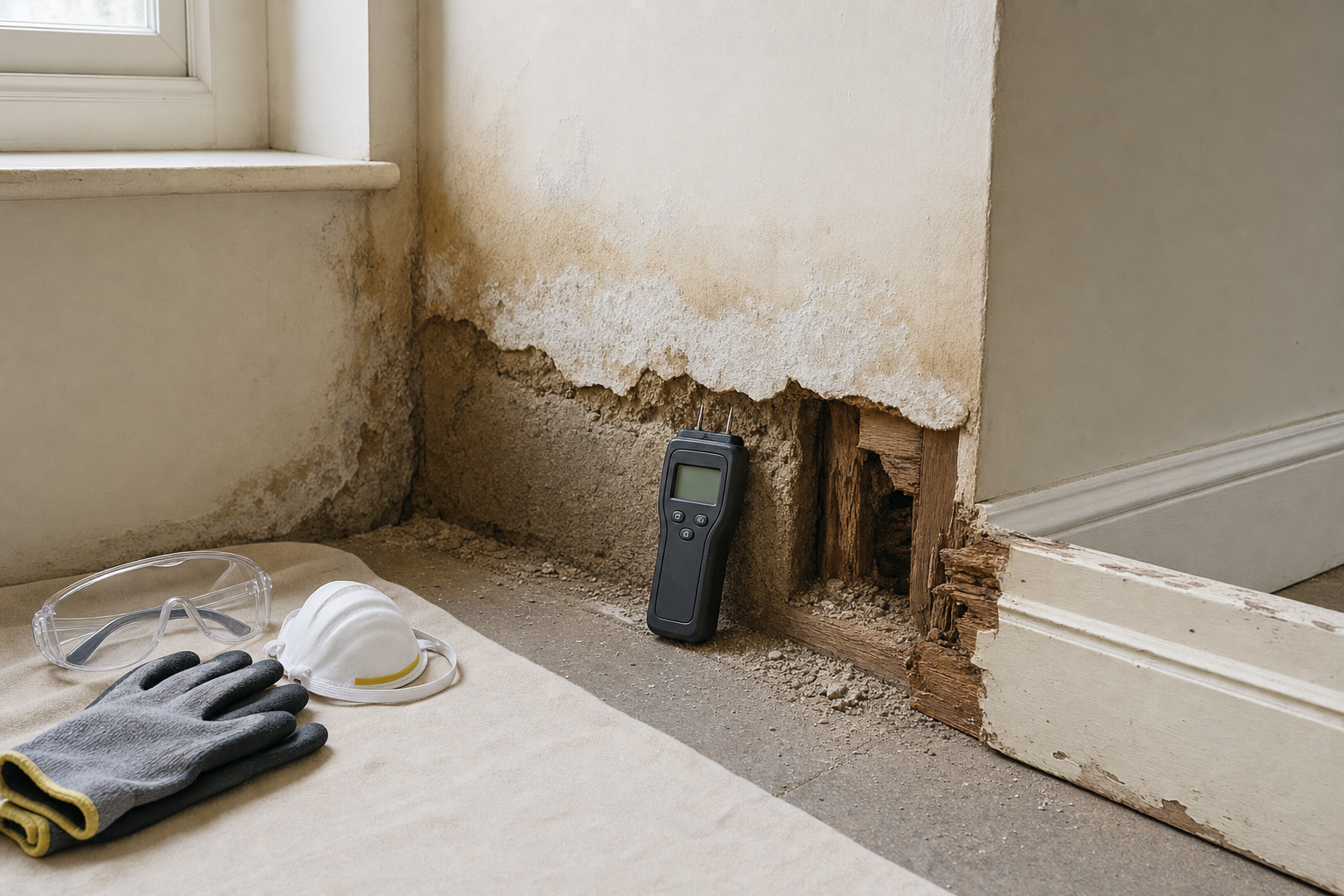
If a Belper property has damp marks low on the wall, crumbling finishes and timber starting to soften nearby, those signs need looking at together rather than one by one. With Derbyshire Damp Services, we inspect whether the wall damage points to rising damp and whether the surrounding timber has suffered from leaks or persistent moisture as well. That can be especially important in Belper where a simple-looking patch may turn out to involve salt contamination, weakened skirtings or deeper wet rot concerns. A proper survey helps separate the cause from the mess it has left behind.
Waterproofing can be part of the wider answer
Some jobs in Belper also need a broader moisture-control approach where membranes, coatings or another structural waterproofing method make sense for the affected fabric. A survey from Derbyshire Damp Services looks at the lower walls, any floor voids and the timber around the problem before deciding what the specification needs to cover. Clear access makes a big difference here, because the wall base, hidden voids and damaged timber often tell the same story from different angles. The aim is to leave you with one practical plan instead of a list of half-connected symptoms.
Frequently asked questions
Can you look at walls and timber together?
Yes. In Belper, wall damp and timber decay often sit side by side, so we inspect both where needed. That helps us explain whether one moisture problem is affecting more than one part of the property.
Do you inspect floor voids?
Yes, where access is available and the survey calls for it. Floor voids can reveal moisture conditions, timber decay and the true spread of the problem, which is why they are important on some properties.
Is waterproofing only for basements?
No. Structural waterproofing is often linked with below-ground spaces, but it can also be relevant to other moisture-exposed building fabric. The right system depends on how and where water is affecting the structure.