
What matters with woodworm treatment
Active or historic infestation
We check whether the attack is current before treatment is recommended.
Deep treatment into timber
The insecticide is chosen to penetrate properly into exposed affected sections.
Strength checked where damage is heavy
Compromised timber is assessed so you know if repairs are also needed.
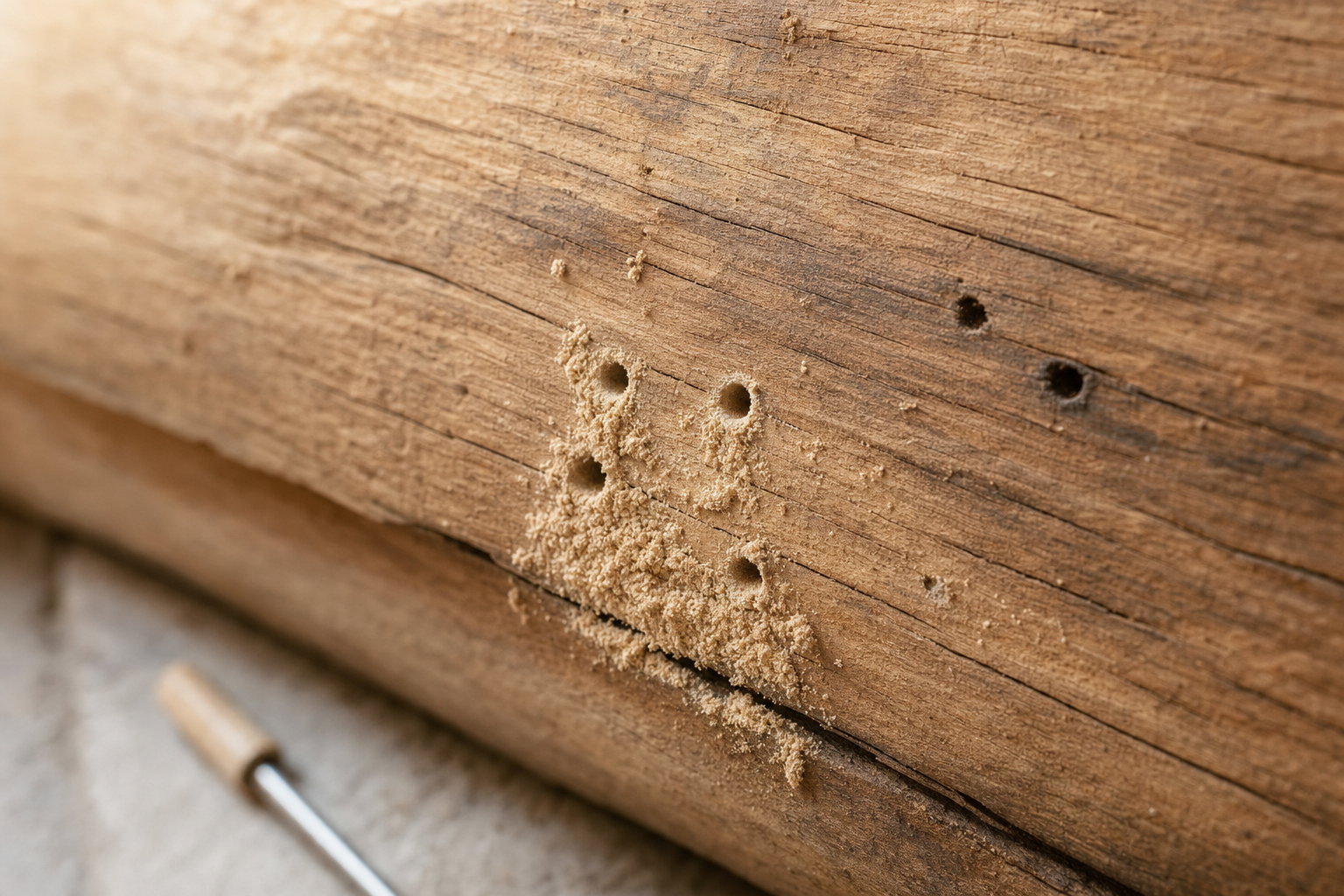
Fresh bore dust tells a different story from old holes
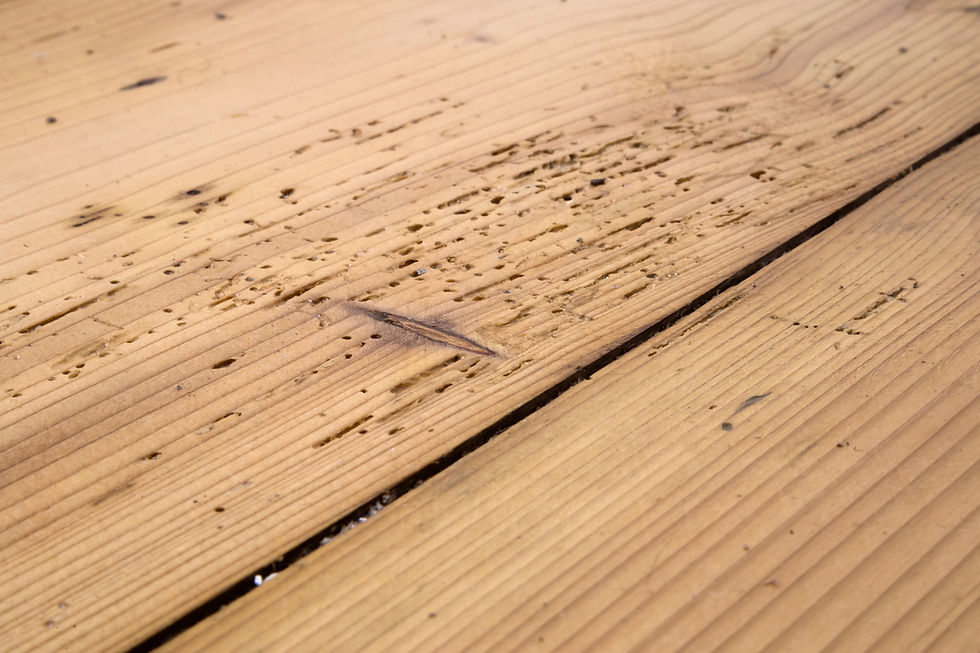
Woodworm is the damage left by wood-boring beetle larvae, and one of the first things we need to know is whether the infestation is active or simply historic. Fresh bore dust, clean-edged holes, weakened surfaces and signs of beetle activity point to a different job from old flight holes in otherwise dry, sound timber. With Derbyshire Damp Services, we inspect the timber carefully before deciding on treatment. That way, you are not paying for chemicals where they are not needed, but you are not leaving active infestation behind to carry on chewing through exposed timber either.
Treat exposed timber properly and assess its strength
Where treatment is needed, work from Derbyshire Damp Services includes preparing the accessible timber and applying a deep-penetrating insecticide so the material is thoroughly treated. If infestation has already weakened the timber, we assess whether any sections need removal and replacement. We also look at the moisture and ventilation conditions around loft spaces, floor timbers and other concealed structural sections, because damp timber can be more vulnerable to attack. Good woodworm work is not just about killing insects. It is also about judging what condition the timber is left in afterwards.
Frequently asked questions
Do flight holes always mean active woodworm?
No. Old holes can remain long after an infestation has ended, which is why the survey looks for fresh bore dust, clean edges and other signs of recent activity before treatment is recommended.
Will you treat roof timbers and floor timbers?
Yes, where access allows and treatment is needed. We inspect the exposed timber first, then explain what can be treated directly and whether any hidden or badly damaged sections need further attention.
What if the timber has already weakened?
If infestation has reduced the timber's integrity, treatment alone may not be enough. We assess whether the section is still sound, then explain whether repair or replacement should be carried out alongside the insecticidal treatment.