
What makes rising damp work hold up
Low-level damage checked properly
We confirm the cause before treatment, rather than assuming every wall base needs injection.
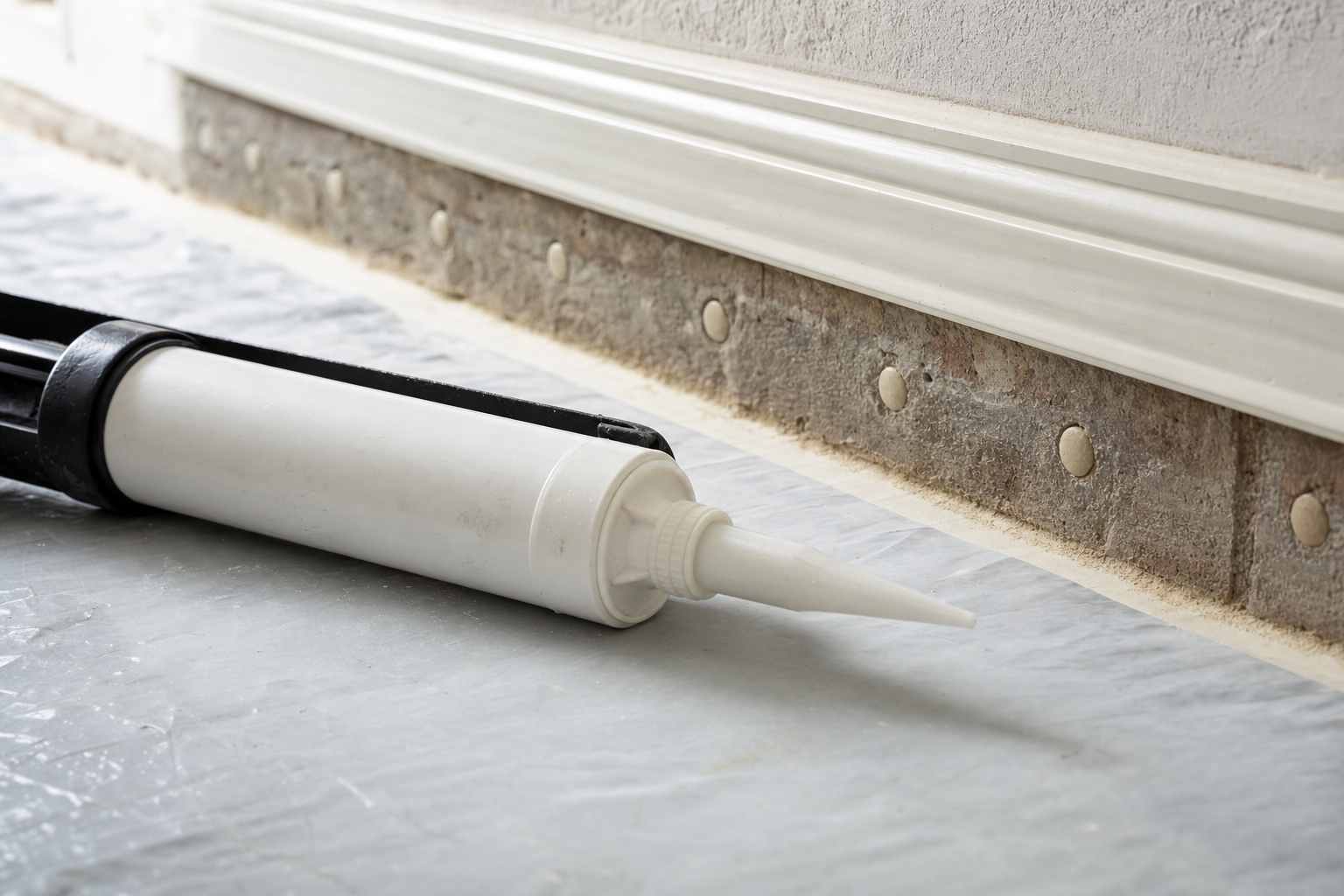
Cream placed in mortar joints
The injected barrier is installed through the wall at controlled points near the base.
Salt-damaged plaster addressed
Where finishes are contaminated, we can strip back and reinstate the affected area.
When moisture climbs from the ground up
Rising damp usually shows itself low down first. You may see tide marks near skirting level, white salt deposits, blown plaster or decorations that never seem to stay sound for long. With Derbyshire Damp Services, we do not assume every low wall mark is rising damp, because leaks, rain ingress and condensation can mimic it. We inspect the pattern, the wall build-up and the moisture conditions before recommending treatment. That way, if groundwater is moving up through porous masonry, the remedial plan is based on what the wall is actually doing, not on guesswork.

How injected treatment and replastering work
Where rising damp is confirmed, a treatment from Derbyshire Damp Services normally involves drilling the chosen mortar line and injecting BBA-approved damp-proof cream to form a water-repellent barrier. If plaster has been damaged by salts, we can remove the contaminated material, apply salt neutraliser and replaster the treated area with suitable materials. We also explain the less glamorous part, which is drying time. The new barrier stops further rise, but retained moisture already sitting in the wall then has to disperse gradually before redecoration.
Frequently asked questions
How do you confirm it is rising damp?
We look for the typical pattern, such as low-level moisture, tide marks and salts, but we also rule out other causes that can look similar. The aim is to separate true upward moisture movement from leaks, rain ingress or internal condensation.
Will holes be drilled in the wall?
Yes, injection treatment involves drilling along the chosen mortar joint near the base of the affected wall. The holes allow the damp-proof cream to be introduced at the right spacing so a continuous barrier can form.
How long before the wall dries out?
Walls do not dry overnight. The new barrier stops further rising moisture, but water already held in the masonry still needs time to evaporate. We explain likely drying expectations and when redecoration is sensible.