
What wet rot repairs should do well
Leak-led diagnosis
We track the wet source first, because timber repair alone is not enough.
Retain or replace as needed
Each section is judged on its condition and the job it does in the building.
Drying allowed after repair
We plan for ventilation and moisture loss around the treated area afterwards.
Wet rot usually stays close to the moisture source
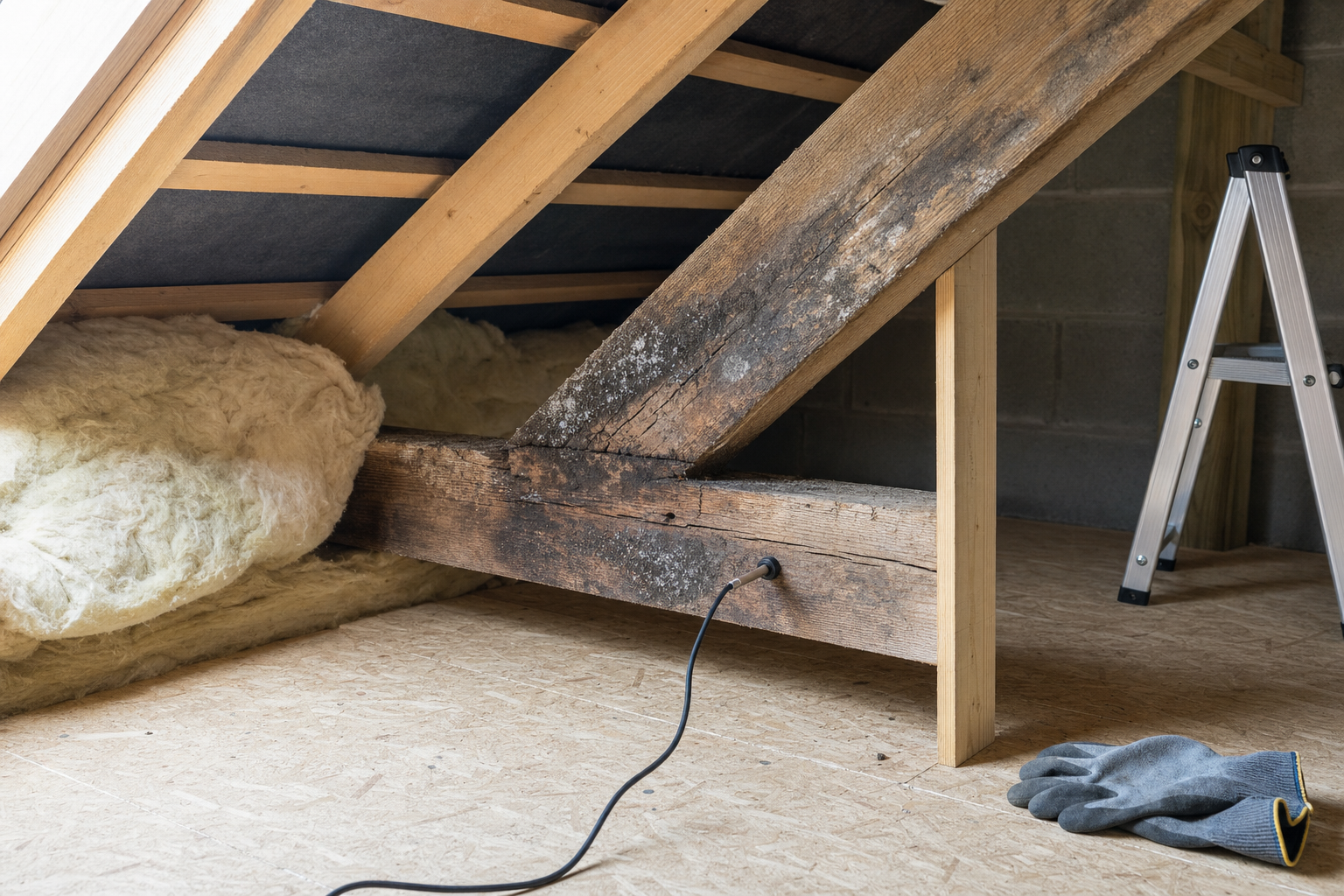
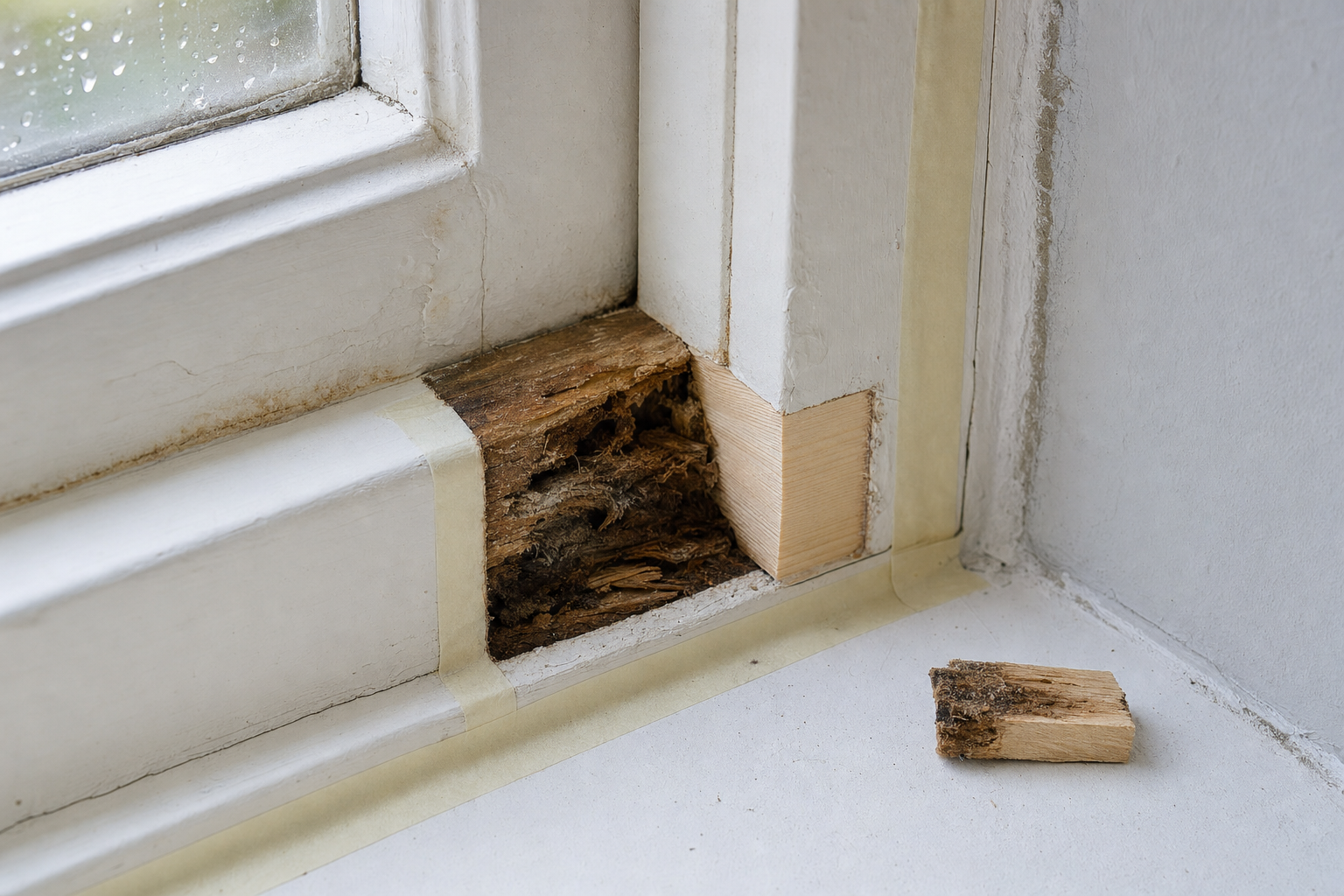
Wet rot tends to be a localised problem, but it can still do serious damage if the timber has been sitting in damp conditions for too long. You might notice darkening, cracking, softness, a loss of strength or visible fungal growth around the area being affected. With Derbyshire Damp Services, we first look for the leak, ingress point or ventilation issue keeping the timber wet. That gives the repair some solid ground to stand on. There is little value in fixing a weakened section if the same moisture is still feeding the decay and quietly starting the problem all over again.
Repair depends on how much strength the timber has lost
Once the moisture source is being dealt with, a wet rot plan from Derbyshire Damp Services is shaped around the condition and role of each affected section. Some timber can be retained and treated with fungicide if it is still sound enough. Other sections need replacing because their strength has been lost. We explain those decisions clearly, then allow for drying and ventilation around the repaired area so the new work is not trapped back in the same damp environment. In short, we fix the reason the timber stayed wet, then repair the timber in a way that matches its condition.
Frequently asked questions
What is the difference between wet rot and dry rot?
Wet rot usually stays close to the moisture source and affects timber that has been kept damp in one area. Dry rot can spread further through concealed building parts, so the survey looks at different signs and likely patterns of damage.
Can part of a timber be kept?
Yes, where the retained section is still structurally sound. We assess the condition of the timber and its role in the building, then explain whether local treatment is enough or whether replacement is the safer option.
Do you treat the surrounding area as well?
Yes, where that is needed. We check nearby timber and the moisture conditions around the damaged section, because the aim is not just to patch one soft area but to leave the repair in a drier, more stable setting.