
What dry rot work needs to achieve
Hidden spread investigated
We look beyond the first visible patch to the timber and spaces around it.
Replacement where strength is lost
Structurally unsound timber can be removed and replaced as part of the repair.
Retained timber treated
Sound sections can be protected with fungicide where that is the right option.
Dry rot spreads where damp timber is left unchecked
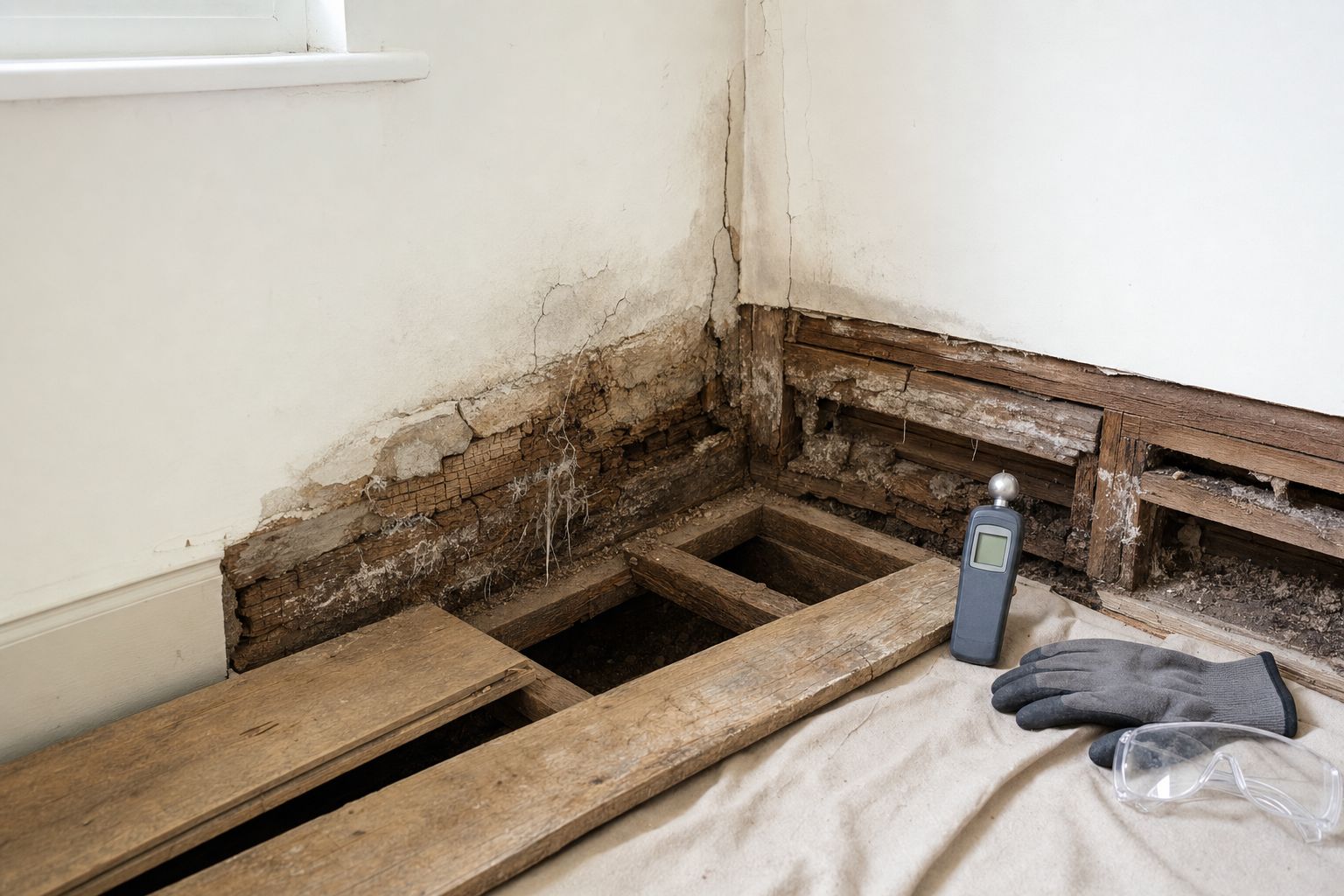
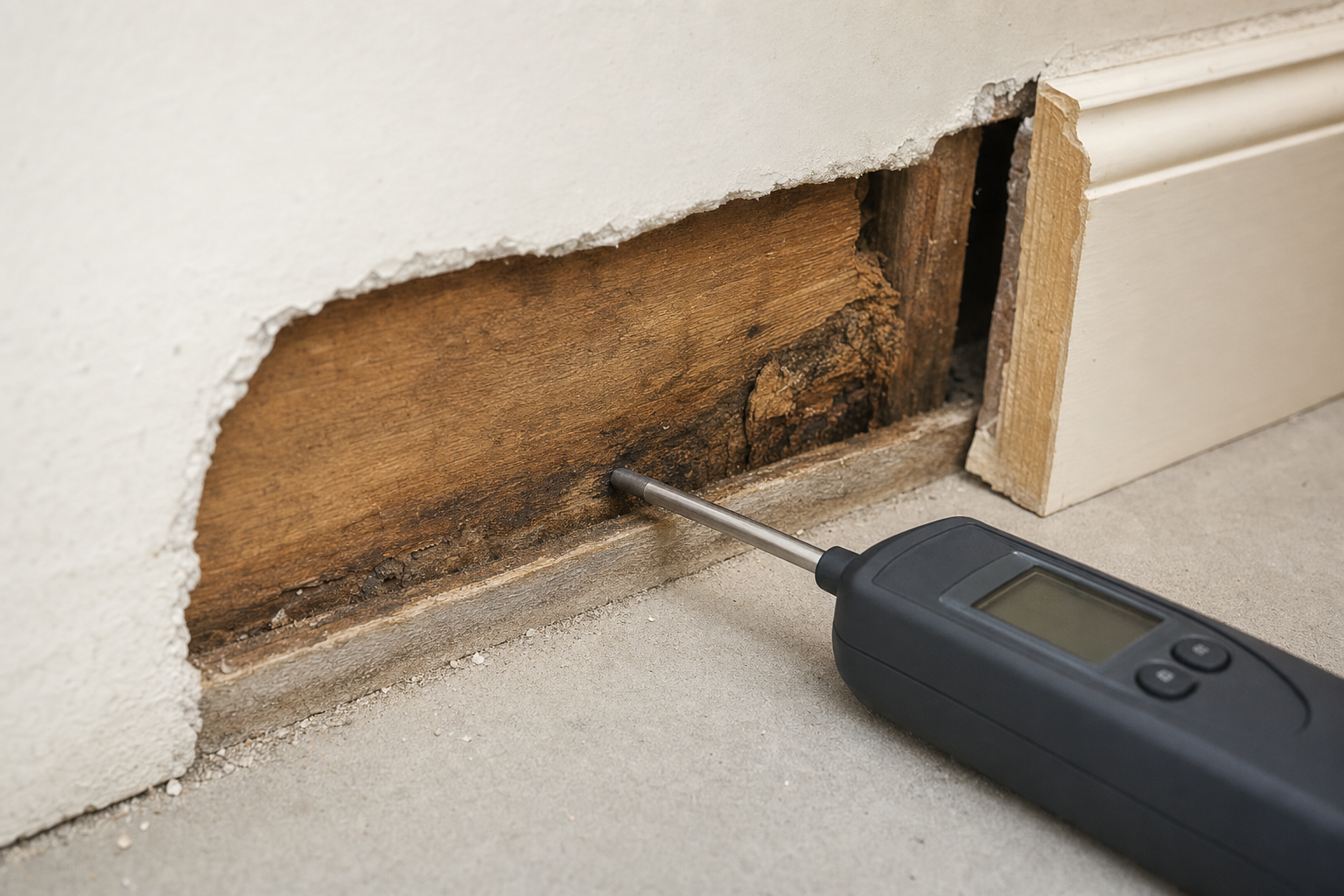
Dry rot is a fungal decay problem that depends on moisture, but it can travel through concealed parts of a building in a way that catches people out. You may notice timber turning brittle, cracking into cubed sections, fungal growth, strands or a stubborn damp, mushroom-like smell. With Derbyshire Damp Services, the first job is to identify the moisture source that is keeping the fungus alive. We then inspect the surrounding area to understand how far the damage may have spread. That wider check matters, because what you can see in one corner is not always the full story with dry rot.
Stop the moisture, then remove and treat timber
A dry rot plan from Derbyshire Damp Services starts by correcting the damp conditions feeding the outbreak. Once that is in hand, we can open up affected areas where needed, remove structurally compromised timber, replace weakened sections and treat retained material with chemical fungicide. We also inspect adjacent timber and concealed zones before reinstatement, so the repair is based on the real extent of the spread. Dry rot is not a problem to paint over and hope for the best with. It needs careful tracing, sound timber decisions and proper control of the moisture that started it.
Frequently asked questions
How do you know it is dry rot?
We look at the condition of the timber, the style of cracking, any fungal growth and the moisture source around it. Dry rot has features that set it apart, but we still inspect carefully before deciding the right remedial approach.
Will you need to open up walls or floors?
Sometimes, yes. Dry rot can spread into concealed spaces, so we may need access behind finishes or under floors to understand the real extent. We explain why that access matters before any opening-up work is carried out.
Can sound timber stay in place?
Yes, if the timber is still structurally sound and suitable for retention. In that case, once the moisture source is addressed, retained sections can be treated while only the weakened parts are removed and replaced.