
What helps rooms stay drier for longer
Less window water and mould
We target the conditions that leave glass, corners and cold areas wet each day.
Advice matched to your home
Heating, airflow and cold surfaces are assessed together before we recommend changes.
Options beyond surface cleaning
Longer-term measures can be used where wiping down never really solves it.
When everyday moisture has nowhere to go
Condensation is often at its worst when the weather turns cold and the same warm, damp indoor air keeps meeting colder surfaces. You wipe the windows, the glass mists up again, and black spotting starts to creep back around reveals, corners or behind furniture. With Derbyshire Damp Services, we look at the way the property is behaving, not just the patches you can see. That means checking high-moisture rooms, airflow, heating patterns and the colder surfaces where water keeps settling. The aim is to understand why the moisture is hanging around long enough to become a constant problem.
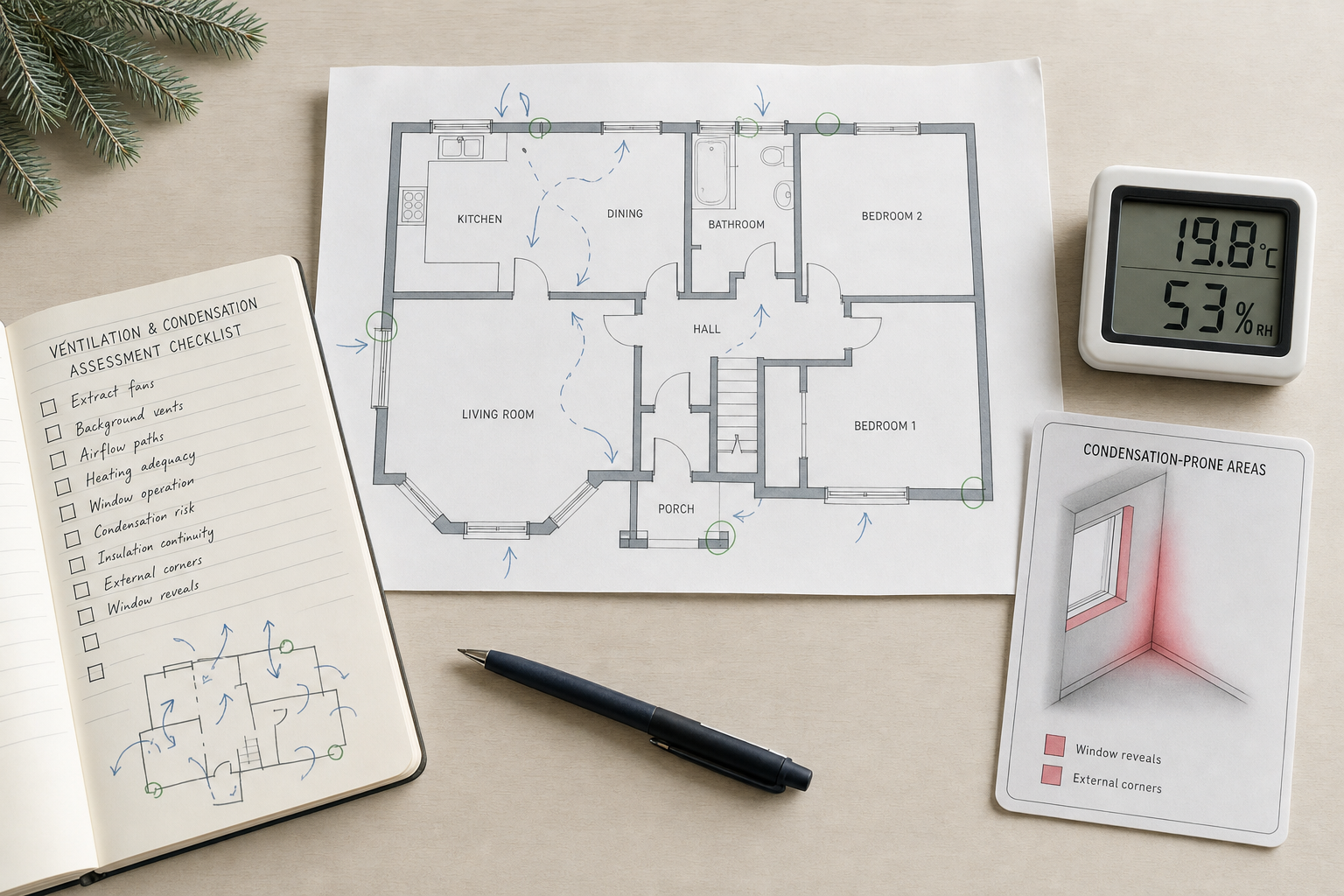

Long-term changes beat constant wiping down
A condensation plan from Derbyshire Damp Services is built around what is driving the moisture build-up in your home. Depending on the findings, that may mean practical advice on ventilation and heating, or a longer-term step such as positive input ventilation, thermal plaster boarding or barrier cream on exposed walls. We explain where each measure makes sense and where it does not. There is no magic wand here, just a proper look at how moisture is produced, how air moves and what needs to change so the same surfaces stop getting wet day after day.
Frequently asked questions
Why is condensation worse in winter?
Cold outside temperatures make inside surfaces cooler, so warm moist air is more likely to turn into water when it touches them. That is why windows, corners and outside walls often show the problem much more clearly in winter months.
Can you treat it without major building work?
Often, yes. Some homes improve with better airflow, extraction and steadier heating. Where the problem is more stubborn, we may recommend a measure such as PIV or thermal improvement, but that depends on what the survey shows.
Does PIV solve every condensation problem?
Not always. A PIV unit can be a very useful long-term tool where whole-house ventilation is poor, but it still needs the right property conditions, sensible heating habits and working extraction in moisture-producing rooms.